SINTERED STONE, also known as porcelain slab, laminate, means "sintered stone". Its hardness exceeds that of igneous rocks such as granite. Rock slab is made of natural stone powder, feldspar and other natural raw materials, through a special process, with the help of more than 36,000 tons of presses, with the NDD technology, after 1280 ℃ high temperature firing and become, can withstand a variety of high-intensity processing of large-size new stone-like materials 1234. Rock slab has the following performance advantages:
Safe and hygienic: can be in direct contact with food, pure natural materials, 100% recyclable, non-toxic and non-radiation, while considering the needs of sustainable development of mankind, health and environmental protection.
Fireproof and high temperature resistance: direct contact with high temperature objects will not be deformed, A1 grade fire performance, encounter 2000 ℃ open fire does not produce any physical changes, and will not emit any gas or odor.
Anti-fouling: 1 in 10,000 water penetration rate, stains can not penetrate, do not give bacteria breeding space.
Scratch resistance: Mohs hardness over 6 degrees, able to resist scuffing and attempted scratching.
Corrosion Resistant: Resistant to a variety of chemicals, including solutions and disinfectants.
Easy to clean: just wipe with a damp towel to clean up, no special maintenance needs, simple and fast cleaning.
All-purpose application: suitable for various shapes to meet high standard application needs.
Flexible customization: rich and diverse textures, can be privately customized according to user needs.
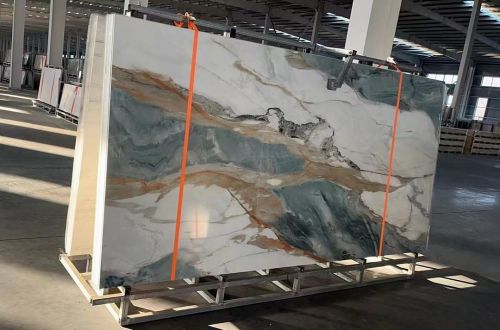
When considering
sintered stone and quartzite as countertop materials, here are some comparisons between them:
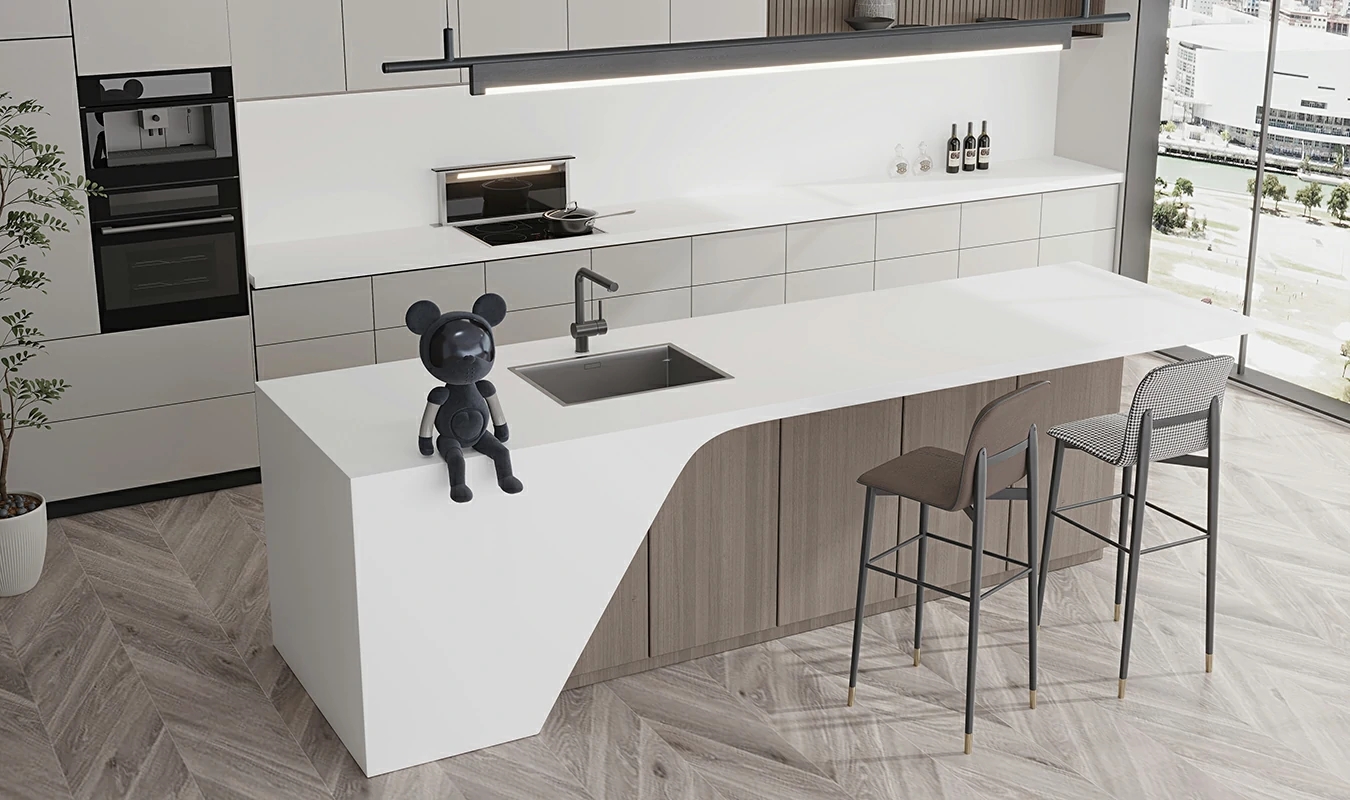
Hardness and abrasion resistance:
Sintered Stone: sintered stone is a natural stone that has a high degree of hardness. It resists scratches and abrasion and is not easily stained.
QUARTZITE: Quartzite also has high hardness, but it is slightly less hard compared to rock slab. However, for kitchen countertops, quartzite is hard enough.
High Temperature Resistance:
Sintered stone: since sintered stone is fired at high temperatures, it can withstand high temperatures. Removing hot pans or other hot utensils directly from the stovetop, oven or microwave will not damage the rock slab.
QUARTZITE: Quartzite can be damaged at high temperatures, so it needs to be managed carefully.
Stain Resistance:
Sintered stone:
sintered stone slabs are less susceptible to stain penetration and are easy to clean. It has a non-porous surface and spills are easy to wipe up.
Quartz stone : Quartz stone is also stain resistant but care needs to be taken to avoid prolonged stains.
Price and maintenance costs:
Sintered stone: sintered stone slabs are relatively inexpensive and less prone to scratches and maintenance costs.
Quartzite: Quartzite has a complex synthetic process and is more expensive to produce, making it more expensive and relatively more expensive to maintain.
Overall, if budget allows, sintered stone is a more advantageous option as it encompasses all the other benefits at a relatively lower price. However, depending on your individual needs and budget, you can choose the countertop material that suits your needs